Travel Documents: Know What You Need to Travel with Horses
- Topics: Article, Recordkeeping, Trailers & Trailer Safety
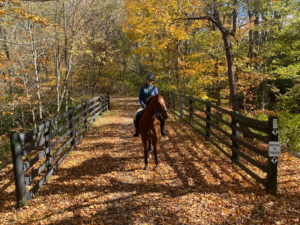
Every year horse owners Cathy and Glenn Price log many miles on equestrian trails that wind through state parks in Kentucky, Tennessee, and throughout the Midwest. And their horses have the travel documents to prove it.
"We carry certificates of veterinary inspection (CVI, health certificates) and Coggins testing paperwork for both our horses whenever we travel with them," Cathy Price says. "State park operators will not issue a campsite without seeing the documents first."
Virtually all U.S. states require that owners or professional shippers moving horses within and across state lines carry the documentation Price describes–proof that each animal has tested negative for equine infectious anemia and has been examined by a veterinarian within a certain time period prior to travel. Here we’ll delve into what it takes to travel with our horses.
Road Trip: Domestic Travel
Equine infectious anemia (EIA) is a potentially fatal viral infectious disease transferred from horse to horse by biting insects such as horseflies and deer flies. Horse owners have been aware of EIA’s deadly potential since the 1880s, but the virus caught equine infectious disease researchers’ attention in 1947, when an epidemic swept through New Hampshire’s Rockingham Park racetrack, leading to the euthanasia of 77 horses
Create a free account with TheHorse.com to view this content.
TheHorse.com is home to thousands of free articles about horse health care. In order to access some of our exclusive free content, you must be signed into TheHorse.com.
Start your free account today!
Already have an account?
and continue reading.

Related Articles


Stay on top of the most recent Horse Health news with