Radiography (X rays)
Article
Diagnosing Hoof Lameness due to Multiple Causes (AAEP 2012)
One vet said multiple abnormalities could contribute to hoof lameness, rather than just one problem.
Photo by Rood & Riddle Equine Hospital
Article
Head Position Impacts Kissing Spines Evaluation (AAEP 2012)
How a horse stands during X rays might influence how vets interpret images when diagnosing kissing spines.
Photo by Tracy A. Turner, DVM, MS, Dipl. ACVS
Article
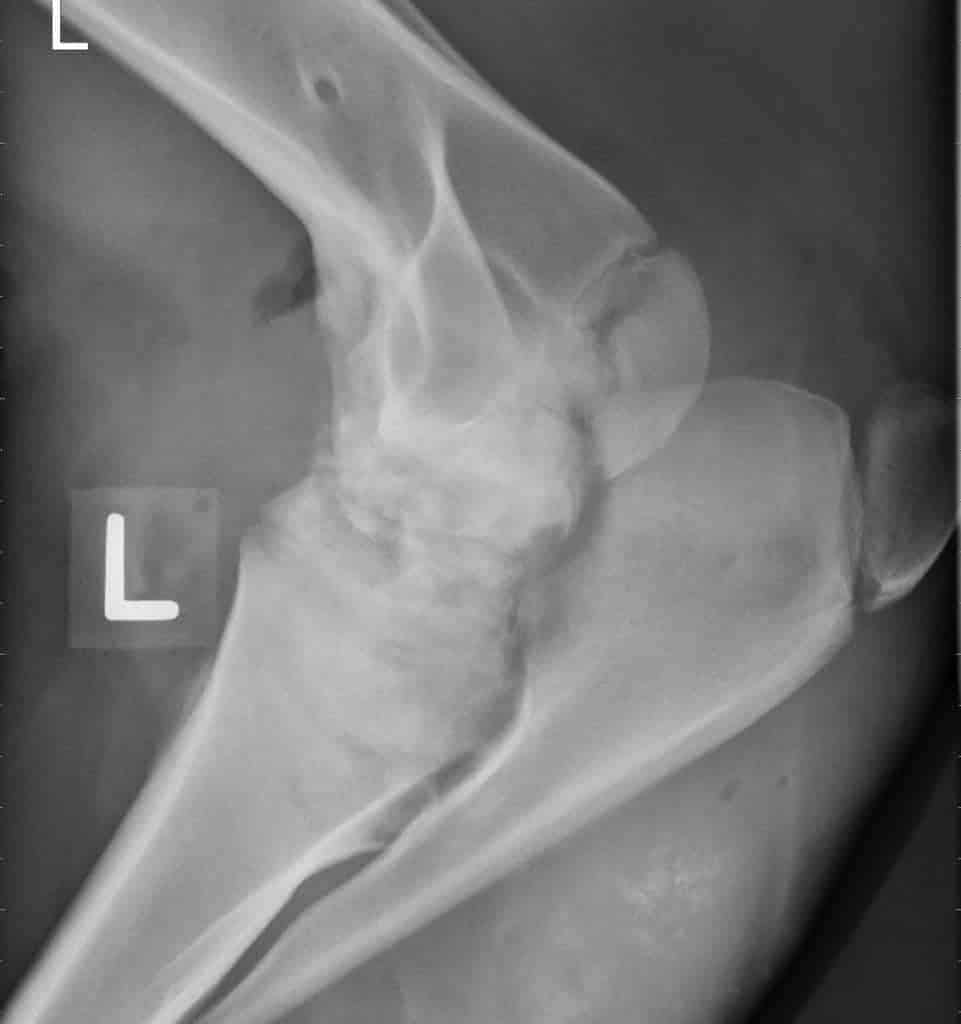
Limb Positioning for Assessing Joints via X Ray (AAEP 2012)
How a horse is positioned while X rays are taken significantly affects joint balance, researchers say.
Photo by Anne M. Eberhardt
Article
Diagnosing Hoof Lameness due to Multiple Causes (AAEP 2012)
April 22, 2013
One vet said multiple abnormalities could contribute to hoof lameness, rather than just one problem.... Read More
Article
Head Position Impacts Kissing Spines Evaluation (AAEP 2012)
April 20, 2013
How a horse stands during X rays might influence how vets interpret images when diagnosing kissing spines. ... Read More
Article
Limb Positioning for Assessing Joints via X Ray (AAEP 2012)
April 08, 2013
How a horse is positioned while X rays are taken significantly affects joint balance, researchers say.... Read More
Article
Hoof Angles' Impact on Lameness Examined
March 06, 2013
Research shows that various angles of the outer and inner hoof are linked to different kinds of lameness.... Read More
Article
Hoof Radiographs' Role In Practical Farriery (AAEP 2012)
January 15, 2013
One vet says radiographs can help in assessing a horse's feet and developing a plan to maximize soundness.... Read More
Article
Managing Equine Arthritis on a Budget
November 14, 2012
Veterinarians can keep diagnostic costs lower by using as much information from routine tests as possible.... Read More
Article
Cannon Bone Fractures in Sport Horses vs. Racehorses
November 07, 2012
Researchers found that clinical signs of cannon bone fractures in sport horses and racehorses were similar.... Read More
Article
Rood & Riddle to Host Forum on X ray, Throat Abnormalities
June 27, 2012
A panel will present radiographic images of joints and endoscopic videos of throats Thoroughbred yearlings.... Read More
Article
Digital Radiographs Beat Analog for Enterolith Detection
May 25, 2012
Digital radiography is up to 85% sensitive and 93% specific for diagnosing enterolithiasis in horses.... Read More
Article
Equine Diagnostic Imaging Horse Course Archived
May 14, 2012
The presentation, "Latest Technologies in Diagnosing Equine Lameness," was led by Kent Allen, DVM.... Read More
Article
The Latest in Diagnostic Imaging Modalities for Horses
May 11, 2012
Each imaging option, such as MRI, radiography and more, serves a unique role in equine lameness diagnosis.... Read More
Article
Ultrasound Beats X Rays for Identifying Articular Lesions
April 17, 2012
Researchers identified nearly 83% of articular leasions via ultrasonography and only 62.2% via X rays.... Read More
Article
MRI to Detect Wobbler Syndrome? (AAEP 2011)
March 12, 2012
Researchers found that MRI more accurately identified compression in CSM horses compared to radiographs.... Read More
Article
Assessing Equine Hoof Balance
February 01, 2011
The old adage "No Hoof, No Horse" has never been truer than in this day and age. Balancing your horse's feet has become more of a factor in promoting good performance and long-term soundness. The optimum balance comes as the horse's weight is... Read More
Article
Laminitis Lowdown
August 01, 2010
The laminitis mystery is far from solved, but researchers continue to discover new clues about its causes, treatment, and prevention. Laminitis, an often devastating hoof disease that can strike horses of any breed without warning, is a major issue... Read More
Article
White Line Disease in Horses
August 01, 2010
Despite its name, white line disease does not actually affect the true "white line" of the hoof. White line disease occurs when bacterial or fungal infections creep into the inner nonpigmented space within the inner hoof wall's stratum medium layer.... Read More
Article
KAEP: Radiograph Reports Not Marketing Tools
June 11, 2010
When shopping for horses at a sale, buyers sometimes ask consignors about the information contained in radiograph reports on the animals instead of hiring a veterinarian to look at the reports in the sale's repository. But according to the Kentucky ... Read More
Article
Lameness: Getting to the Bottom of It
April 01, 2010
Pinpointing lameness in horses is crucial before proper treatment can be prescribed. There are several approaches to lameness examinations and diagnostic methods, which will be partly determined by the age of the horse and what it does for living.... Read More
Article
Broken Coffin Bones Common in Warmblood Foals
February 17, 2010
A recent study of coffin bone (distal phalanx) fractures in foals found they were far from rare. In fact, all 20 of the Warmblood foals in the study (all foals on a particular farm in one season) had fractures at some point in their first year ... Read More
Article
Radiographic Abnormalities in Young Quarter Horses Common, AAEP 2009
January 29, 2010
A high prevalence of radiographic abnormalities exist in the joints of yearling and 2-year-old Quarter Horses.... Read More
Article
Transporting Horses with Fractures
October 09, 2009
Some of the most important factors for a successful fracture outcome are limb stabilization and first-aid.... Read More
Article
Joint Problems: Blood Tests Might Aid Early Screening
September 22, 2009
Research using biomarkers in horse's blood to predict whether he is at risk of developing bone/joint disorders... Read More
Article
The Well-Equipped Vet
August 01, 2009
Veterinarians can better diagnose problems in our horses because of the improving array of equipment they have in their arsenals. Technology has transformed our music, photography, movies ... our entire popular culture.... Read More
Article
Equine Sinus Surgery Aided by CT Scan
July 31, 2009
Paranasal sinus surgery is a challenging operation that can encounter complications, such as pneumocephalus, a condition in which air is trapped inside the brain. Veterinarians recently used a computed tomography (CT) scan to decide the best way... Read More
Article
AAEP Issues 'Best Practices' for Purchase Exam Radiographs
June 17, 2009
The American Association of Equine Practitioners' Public Auction Task Force has developed recommendations regarding the use of radiographic reports as part of the prepurchase... Read More
Related Multimedia & Downloads
Find more related content in:
Farm Call: Your Questions Answered
Pre-Purchase Exams
Q. Q: Over the years, I've had a number of pre-purchase exams done on my horses. I've come to realize that one vet will read an X ray and say a horse has arthritis, osteochondritis dissecans (OCD), navicular problems, etc., but when you have a different vet read the same X rays, they will come up with totally different findings. Why is
Who Owns Radiographs?
Q. Q: My vet took some X rays of my horse's legs. I paid the bill in full, but when I asked for the X rays, he said they belonged to him and not me. Is this correct? If I'm charged for the X rays, why can't I have them? A: Many veterinarians run into this situation, not only equine veterinarians. To the client, it makes sense that he or she would own the radiographs (X rays) since he or she paid...
Coffin Bone Fractures
Q. My horse has been diagnosed with a fractured coffin bone. What could have caused it, and what is the prognosis? Fractures of the coffin bone or distal phalanx usually occur in the horse following some type of trauma, often from kicking, or a large force placed on the coffin bone (i.e., racing on hard tracks). However, they can occur from a penetrating object or as the result of