Forelimb
Webcast
Stem Cell Therapy for Orthopedic Injuries
Dr. Ross Rich shares his experience treating equine orthopedic injuries with stem cells.
Photo by Erica Larson, News Editor
Article
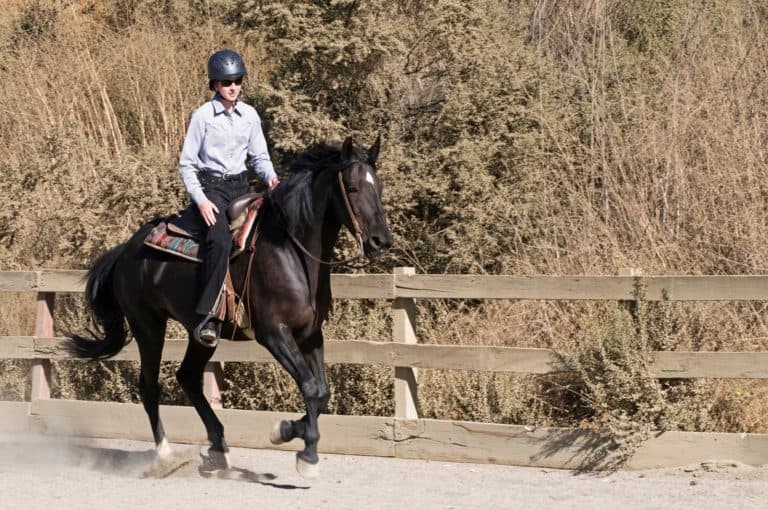
Evaluating Horse Feet, Legs, and Gaits (AAEP 2011)
One researcher described how to evaluate horses' feet, legs, and gaits for potential soundness or lameness.
Photo by Stephanie L. Church, Editor-in-Chief
Article
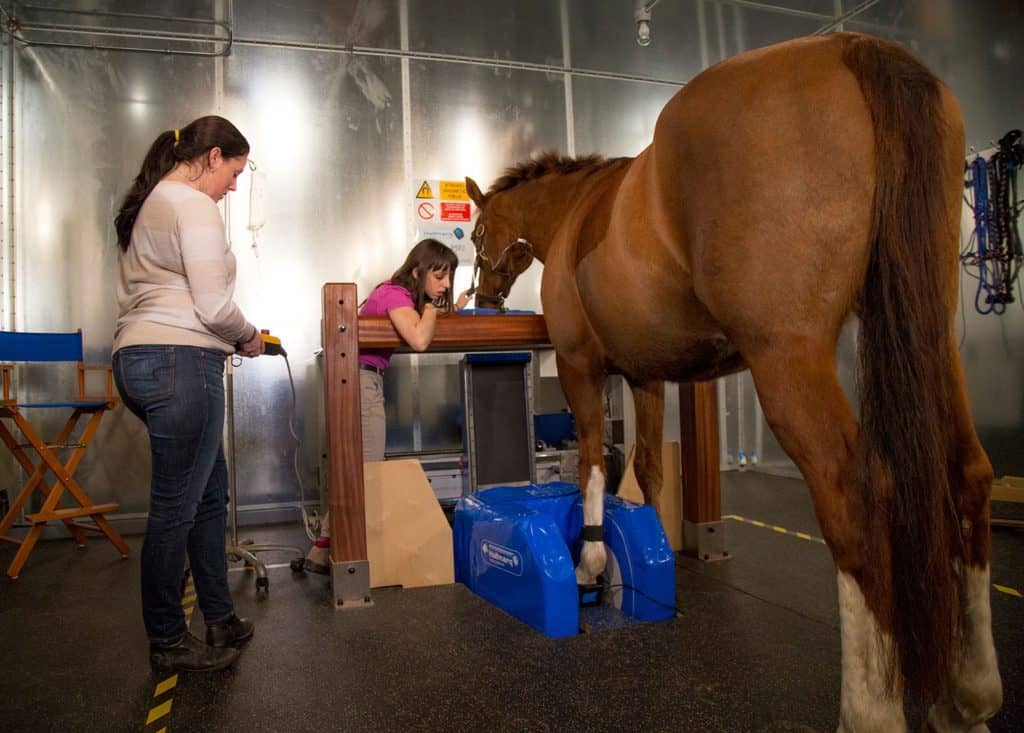
Study: MRI Beneficial for Diagnosing Some Leg Lamenesses
MRIs picked up a wider range of abnormalities in some lame horses than did X rays or ultrasounds.
Photo by Anne M. Eberhardt
Article
Study Examines Osteoarthritis Formation after Fetlock Injury
November 24, 2012
A single impact injury did not cause generalized osteoarthritis in the fetlock during the study period.... Read More
Article
Derby, Preakness Runner-Up Retired with Shoulder Injury
August 21, 2012
The colt was diagnosed with a peripheral nerve injury that caused atrophy in his left infraspinatus muscle.... Read More
Article
Evaluating Horse Feet, Legs, and Gaits (AAEP 2011)
March 02, 2012
One researcher described how to evaluate horses' feet, legs, and gaits for potential soundness or lameness.... Read More
Article
Alltech's Equine News and Brews Resumes Feb. 23
February 17, 2012
The 2012 program kicks off on Feb. 23 with "Managing Angular Limb Deformities in the Young Horse."... Read More
Article
Study: MRI Beneficial for Diagnosing Some Leg Lamenesses
October 24, 2011
MRIs picked up a wider range of abnormalities in some lame horses than did X rays or ultrasounds.... Read More
Article
Prosthetic Limbs for Horses: A Closer Look
April 10, 2011
Horses have traditionally been considered obligate four-legged animals; however, the dogma is changing. ... Read More
Article
Diagnosing Equine Bone Fragility Syndrome (AAEP 2011)
April 08, 2011
Clearly defined diagnostic criteria could help veterinarians detect BFS earlier and more accurately.... Read More
Article
Equine Navicular Disease
January 01, 2011
The navicular bone, a small, boat-shaped bone nestled deep in the protective womb of the hoof, only measures approximately 6 cm wide and 2 cm deep (top to bottom) in an average 1,200-pound horse, so how can such a small bone be such a nuisance?... Read More
Article
Sudden Conformation Change in an Aged Mare
December 01, 2010
Q: My 20-year-old Dutch Warmblood mare has been in extensive training and showing since she was four and has been awarded high honors in breeding quality status. However, over the past two years she has become increasingly over at the knee ... Read More
Article
Horse Conformation Conundrums
October 01, 2010
A horse needs to be put together properly, but does he need to be put together perfectly?... Read More
Article
Carpometacarpal Osteoarthritis in Horses Reviewed
January 09, 2010
Osteoarthritis of the carpometacarpal joint (the lower joint space of the knee in a horse's front leg) is a debilitating and life-threatening condition. However, surgically fusing the joint appears to be a viable treatment option in affected ... Read More
Article
Uneven Feet in Sport Horses Related to Other Conformation Traits
May 29, 2009
Researchers examined the effects of uneven feet on equine performance and linked this to other faults. ... Read More
Article
Knee Arthritis Treatments Examined (AAEP 2008)
March 24, 2009
The objective of joint therapy is to decrease pain using an osteoarthritic drug that modifies clinical signs and to minimize further deterioration with a disease-modifying osteoarthritic drug.... Read More
Article
Searching for the Source of Carpal Lameness
April 30, 2008
The equine carpal (knee) joint is a veritable puzzle of bones and sometimes a diagnostic enigma for veterinarians. Mike Ross, DVM, Dipl. ACVS, of the University of Pennsylvania's New Bolton Center offered some insight to practitioners on working... Read More
Article
Anatomy and Physiology: Special Report
April 19, 2007
Want to know how your horse's body works? Find out in The Horse's 12-part Anatomy and Physiology series, sponsored by the American Association of Equine Veterinary Technicians (AAEVT), Classic Medical, OCD Equine, and Succeed. You can download these ... Read More
Article
On the Forehand
March 01, 2006
The foreleg of the horse is, for the most part, a model of good engineering. It is structured in such a fashion that the horse can move slowly or at speed with the concussion of each footfall minimized by a sophisticated shock absorbing system.... Read More
Article
AAEP Convention 2005: Forelimb Conformation of the Growing Thoroughbred
February 16, 2006
University of Wisconsin researchers have shown that certain forelimb characteristics in the growing foal are associated with higher birth weights, and a foal's carpal (knee) conformation is associated with the carpal conformation of both of its... Read More
Article
AAEP Convention 2005: Forelimb Conformation and Race Performance
February 16, 2006
Straight conformation in the forelimb doesn't necessarily beget a more successful racehorse. This is what a research group from the University of Wisconsin's School of Veterinary Medicine discovered in a recent study. However, the group also... Read More
Article
Biomechanical Efficiency
October 01, 2005
The horse is an amazing athlete, with great speed and endurance considering his body size and weight. For the past 20 years, researchers have evaluated what makes the equine locomotive system so efficient for racing and other strenuous... Read More
Article
Sales Integrity Program Committee Addresses Concerns Over Surgery Disclosure
August 02, 2005
The monitoring committee for the Sales Integrity Program is taking action to address some consignors' concerns about how the Thoroughbred auction industry will handle the disclosure of invasive joint surgeries and other procedures designed to... Read More
Article
Conformation of Racehorses
May 01, 2005
In her study, nearly all racing-bred Thoroughbred foals were carpus valgus (knock-kneed) at birth, many toed out, and a few had offset knees. But at about 18 months of age, nearly two-thirds had offset knees and the incidence of knock knees ... Read More
Article
Forelimb Conformation and the Thoroughbred Racehorse
March 15, 2005
"What is the relationship between conformation and performance, and what can we do to impact it?" These questions have been asked by those focused on performance in many species, and they were the focus of one presentation by Liz Santschi, DVM,... Read More
Article
Conformation Development in Growing Thoroughbreds
February 18, 2005
Selection of Thoroughbred horses for racing and breeding is based primarily on equine performance, pedigree, and phenotype (physical characteristics). Although conformation plays a critical role in the evaluation of horses, current methods of... Read More
Article
Conformation And Racing Problems (AAEP 2003)
February 23, 2004
Genetics, racing surface, number of starts, age of the horse, pre-existing disease, conformation, and trauma have all been implicated as potential factors in the cause of racing and training injuries.... Read More
Article
Bouncing Knees a Problem?
November 01, 2001
I have a 6-year-old Quarter Horse gelding that I trail ride in the mountains. He is noticeably "over at the knees." Often while riding, one knee or the other will wobble forward and back when we pause. He doesn't appear lame or swollen, but... Read More
Related Multimedia & Downloads
Find more related content in:
Farm Call: Your Questions Answered
Sudden Conformation Change in an Aged Mare
Q. Q: I have a 20-year-old Dutch Warmblood mare that I have owned since she was born. She has been in extensive training and showing since she was four and has been awarded high honors in breeding quality status. However, over the past two years she has become increasingly over at the knee and bobbles her knees just standing in her stall. She fell down while I was riding her not long ago
Bouncing Knees a Problem?
Q. I have a 6-year-old Quarter Horse gelding that I trail ride in the mountains. He is noticeably "over at the knees." Often while riding, one knee or the other will wobble forward and back when we pause. He doesn't appear lame or swollen, but the bouncing makes me wonder if his tendons are sore. Most of my rides have uphill climbing, and I don't want to Bute him for every ride (three or fou