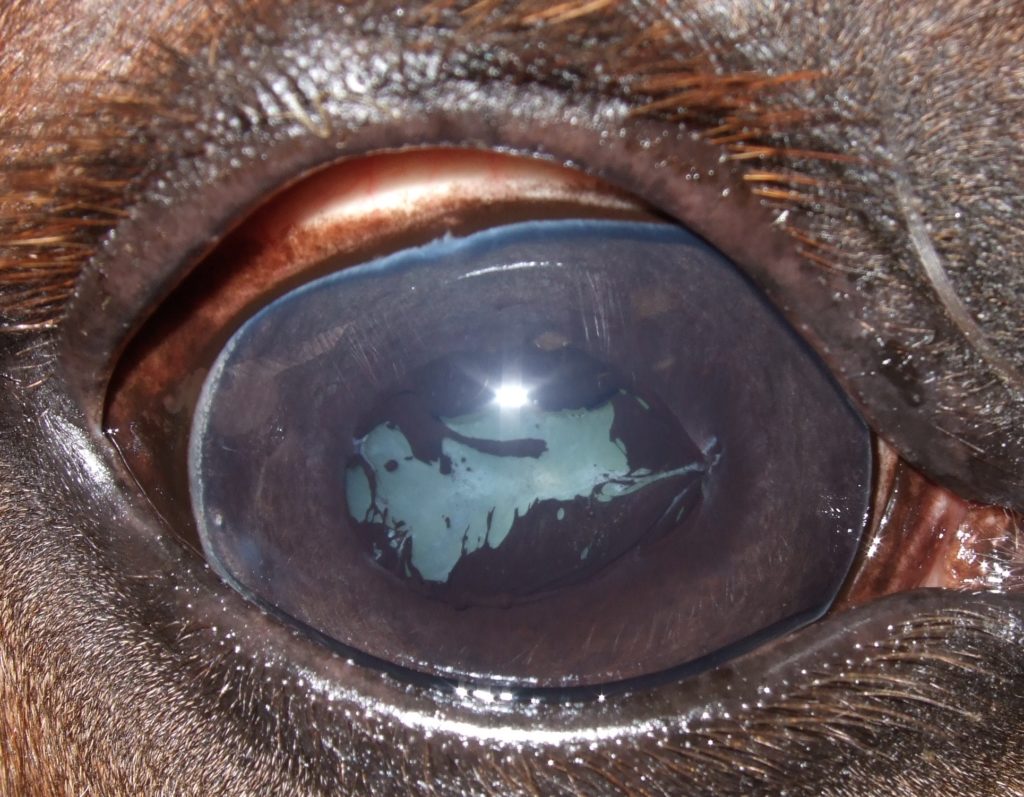
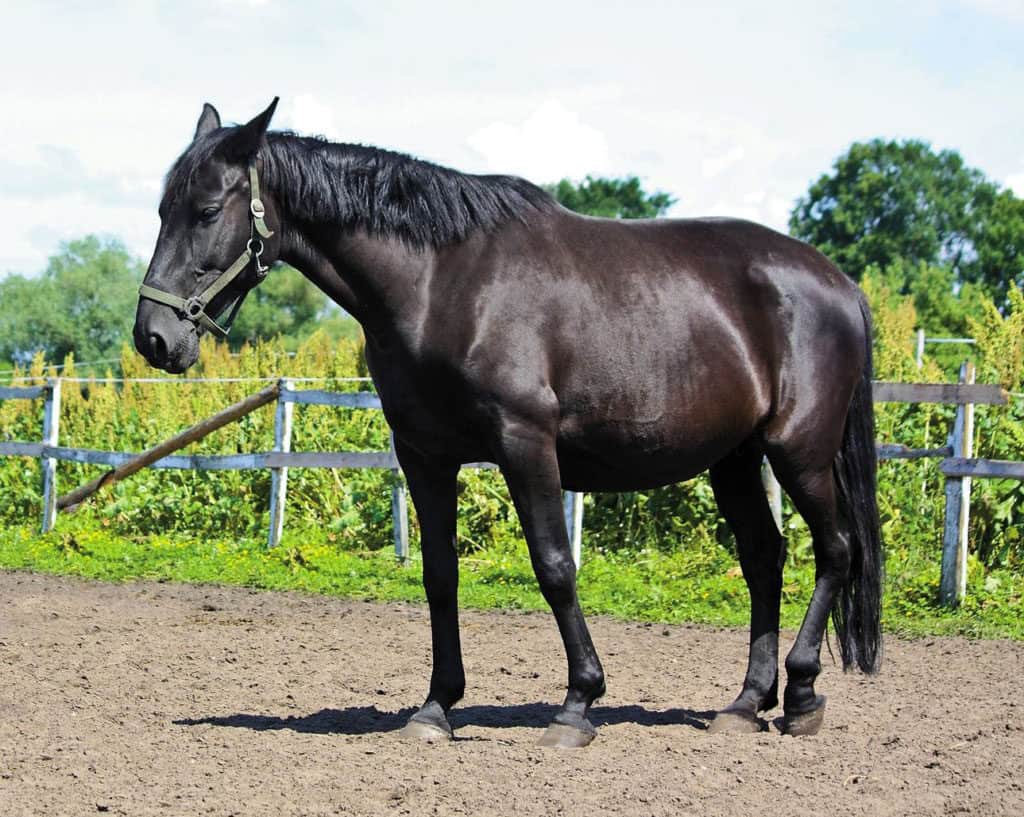
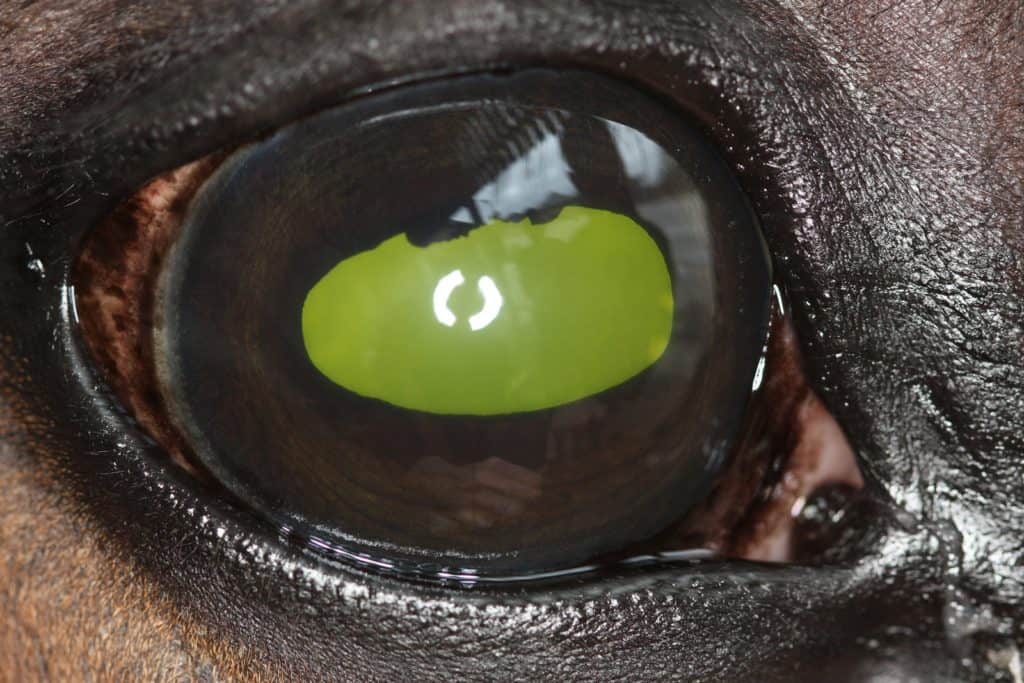
Uveitis (moon blindness)
Article
Researchers Pinpoint Link Between Appaloosa Coloring and Night Blindness
Congenital stationary night blindness causes vision deficits in Appaloosas with certain coat patterns.
Photo by Dawn Garner
Article
Advances in Equine Ophthalmology
Treatment and research breakthroughs help to wage the war against equine vision problems.
Photo by Anne M. Eberhardt
Article
Managing the Swollen Eye in the Field (AAEP 2012)
January 31, 2013
The acutely swollen eye can present many diagnostic challenges to the field practitioner.... Read More
Article
Advances in Equine Ophthalmology
November 02, 2012
Treatment and research breakthroughs help to wage the war against equine vision problems.... Read More
Article
Caring for the Blind Horse
November 01, 2012
Most horses adapt well to vision loss but still require special management in a safe environment.... Read More
Article
Study: Laser Glaucoma Treatment Helps, But Doesn't Cure
July 03, 2010
A specially designed surgical laser can help control fluid pressures in the eyes of horses with glaucoma and help maintain vision, but it does not alleviate the need for the continued use of topical eye medications, according to David A. Wilkie... Read More
Article
Equine Recurrent Uveitis Biomarker Research a Real Eye Opener
October 15, 2009
Equine recurrent uveitis (ERU) is the most common cause of blindness in horses and is believed to affect approximately 10% of the equine population. The exact cause of ERU remains unclear, althoughresearchers have shown that recurrent bout... Read More
Article
Equine Recurrent Uveitis: Watery Eyes Can Indicate a Serious Problem
July 06, 2009
While there are many reasons for a horse to have excessive tear production, it's a classic sign of equine recurrent uveitis, also known as moon blindness.... Read More
Article
Leptospira Not an Important Factor in Recurrent Uveitis, Researchers Say
November 01, 2008
As a result of aggressive research efforts, the underlying causes and factors contributing to recurrent uveitis--a painful and debilitating condition that is the leading cause of blindness in horses--are becoming known. "Recurrent... Read More
Article
Cataracts in Horses
May 06, 2008
Cataracts have been found to be heritable in Belgians, Morgans, Thoroughbreds, Rocky Mountain Horses, and Quarter Horses. In other instances, cataracts can develop secondary to trauma or due to chronic inflammation from uveitis (moon blindness).... Read More
Article
Uveitis: Medical and Surgical Treatment
April 19, 2008
Equine recurrent uveitis (ERU) is like an autoimmune response, tending to be a dynamic process with shifts in immune reactivity that cause a waxing and waning of uveitis episodes.... Read More
Article
Leptospirosis: What Is It?
March 01, 2008
Don’t overlook this "bug" that can cause abortion and uveitis (moon blindness). Many horse people don't know that much about leptospirosis. If you have heard of it, it is probably in... Read More
Article
Horse Recovering from New Glaucoma Procedure
December 13, 2007
VIDEO | A horse that underwent a rare endoscopic laser eye procedure is showing normal intraocular pressure (IOP), a key indication that the procedure has brought his... Read More
Article
Researchers Pinpoint Link Between Appaloosa Coloring and Night Blindness
November 21, 2007
Congenital stationary night blindness causes vision deficits in Appaloosas with certain coat patterns.... Read More
Article
Veterinary Ophthalmologists Using New Equipment to Correct Glaucoma
November 10, 2007
Next week, veterinary ophthalmologists at The New Jersey Equine Clinic in Clarksburg, N.J., will perform an endoscopic laser procedure on a horse with glaucoma--one of the first equine uses for a new piece of equipment in the ophthalmologists'... Read More
Article
New Web Site Focuses on Blindness in Appaloosas
September 24, 2007
A new website launched by the Montana-based Rolling Dog Ranch Animal Sanctuary examines research on uveitis and blindness in Appaloosa horses.... Read More
Article
Moon Blindness
February 01, 2007
"Moon blindness" is a chronic, painful eye disease, and it's the most common cause of blindness in horses. It was so named during the 1600s because people thought recurring attacks were related to phases of the moon. This eye disease might be one o... Read More
Article
Uveitis and a Detached Retina: Surgery to Save Horse's Vision
October 21, 2006
The horse, Lexius (Lexi), a 13-year-old Dutch Warmblood mare, had an infection in the vitreous that caused chronic inflammation and uveitis in both eyes. The most likely cause of the infection is the bacteria leptospirosis.... Read More
Article
The Gift of Sight
April 11, 2006
The lessons I learned from this experience are that if an eye infection does not resolve--or look much improved--in a week, then seek an ophthalmologist or at least ask your veterinarian to take samples of the infected area for further study.... Read More
Article
Leptospiral Uveitis Helps Vaccine Research
March 09, 2005
Ashutosh Verma, BVSc, MVSc, graduate research assistant in the laboratory of John Timoney, BSc, MVB, MRCVS, MS, PhD, DSc, Keeneland Association Chair in Equine Science, at the University of Kentucky's Gluck Equine Research Center in Lexington,... Read More
Article
The Equine Eye (AAEP Wrap-Up)
March 01, 2004
"There are really only two ophthalmic disease: Corneal ulcers and everything else," said Brooks. Therapies are different, and some therapies for the "everything else" can make ulcers worse, cautioned Brooks.... Read More
Article
Moon Blindness Attacks
January 01, 2002
Q. Is there any food, treat, or climate that causes moon blindness flare-ups? My horse recently had one, and I want to prevent any more if possible. I already use a fly mask for "sunglasses." Paige A. Unfortunately, we... Read More
Article
The Equine Eye
October 15, 2001
Because it is a prey animal, the horse has both monocular and binocular vision. Its monocular vision is the result of having one eye located on each side of the skull instead of both eyes in the front. This means that the horse has far greater periph... Read More
Article
Uveitis Research Pinpoints Leptospira interrogans
January 01, 2001
A recent study published in the Journal of the American Veterinary Medical Association provides evidence that persistent ocular (eye) infection with the bacterium Leptospira interrogans is much more common in horses with recurrent... Read More
Article
Leptospirosis in Horses
October 01, 1998
Acute leptospirosis in horses is characterized by fever of 103-105° Fahrenheit for two to three days, depressi... Read More
Article
Periodic Ophthalmia (Moon Blindness)
July 01, 1998
Periodic ophthalmia, otherwise known as recurrent uveitis, uveitis, or moon blindness, can be a devastating disease of the equine eye. It also, unfortunately, is a disease that we really don't know much about. The hypothetical... Read More
Article
Surgery For Recurrent Uveitis
December 19, 1997
Equine recurrent uveitis (ERU) or periodic ophthalmia frequently is a sight-threatening intraocular inflammatory disease of the eye in equids of any age in all parts of the world. Severe single attacks, as well as recurrent minor episodes, can... Read More
Related Multimedia & Downloads
Find more related content in:
Farm Call: Your Questions Answered
Moon Blindness Attacks
Q. Q. Is there any food, treat, or climate that causes moon blindness flare-ups? My horse recently had one, and I want to prevent any more if possible. I already use a fly mask for "sunglasses." Paige A. Unfortunately, we don't know what factors cause recurrence of inflammation in horses with equine recurrent uveitis (ERU) or "moon blindness." However, one of the causes o