Kidney Problems
Article
Causes of Red Urine in Horses Reviewed
Exercise-associated hematuria, urethral tears, and idiopathic renal hematuria are three less common causes.
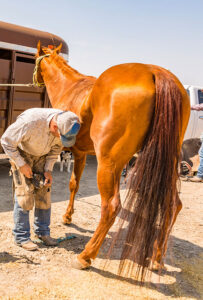
Photo by Photos.com
Article
Diagnosis and Treatment of Kidney Diseases in Horses
Acute kidney injury, or compromised renal function, is often reversible if treated appropriately and promptly.
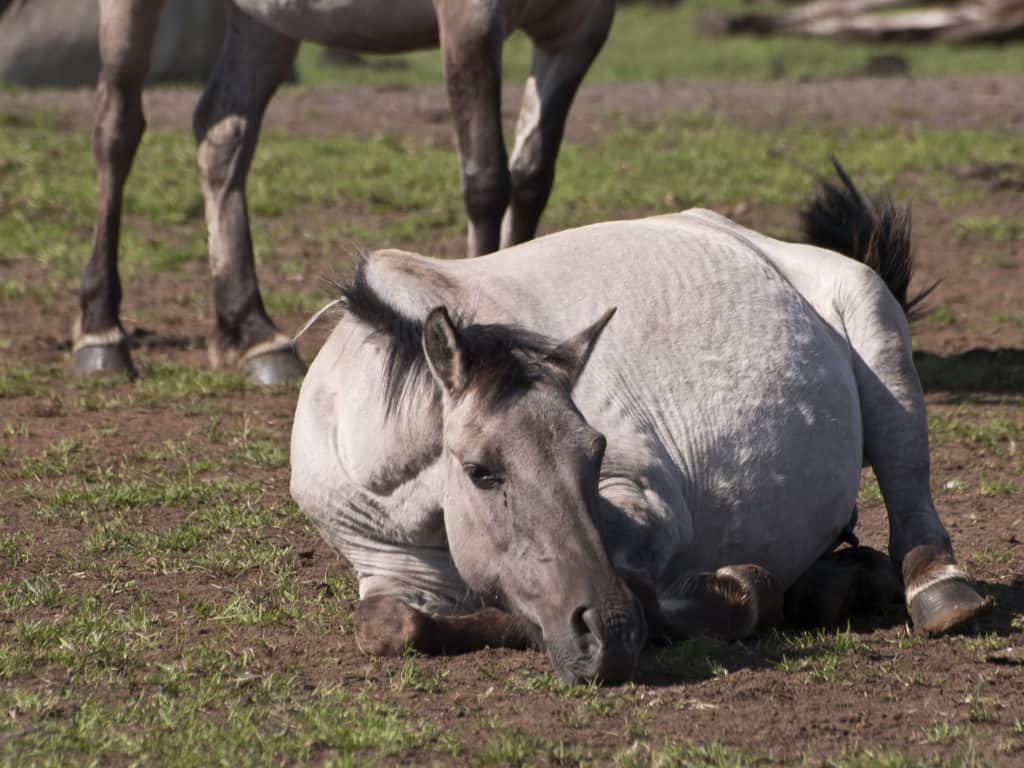
Photo by The Horse Staff
Article
Causes of Red Urine in Horses Reviewed
January 12, 2012
Exercise-associated hematuria, urethral tears, and idiopathic renal hematuria are three less common causes.... Read More
Article
Diagnosis and Treatment of Kidney Diseases in Horses
January 09, 2012
Acute kidney injury, or compromised renal function, is often reversible if treated appropriately and promptly.... Read More
Article
Human Medical Tools Might Help Foal Live with Diabetes
December 18, 2008
High-tech medical devices normally reserved for humans might prove helpful in managing the health of Justin Credible, the colt with the first documented case of type-1... Read More
Article
Kentucky Colt with Type-1 Diabetes Might Be First
December 03, 2008
A colt born with type-1 diabetes might be the first documented equine case of the illness, according to his veterinarian, Nathan Slovis, DVM, Dipl. ACVIM, of Hagyard Equine Medical Institute in Lexington, Ky. The Kentucky Mountain Saddle... Read More
Article
Urinary Tract Problems
April 23, 2008
The urinary tract is a vital system that should never be taken for granted; if a problem develops, it can rapidly become a crisis (Editor's Note: Contributing to this article was Hal Schott, DVM, PhD, Dipl. ACVIM,... Read More
Article
Acute Renal Failure: Peritoneal Dialysis Provides New Hope for Horses
July 12, 2007
Acute renal failure used to be a death sentence for a horse, but a new procedure pioneered by Laurie Gallatin, DVM, Dipl. ACVIM, could be a viable option for getting horses with this condition through the most dangerous period.... Read More
Article
Non-Steroidal Anti-Inflammatory Drugs (NSAIDs)
April 01, 2007
We keep them in our barns, give them to our animals, and take them ourselves. Non-steroidal anti-inflammatory drugs (NSAIDs) are common, but they aren't benign. In this article we'll investigate what NSAIDs are and aren't, and what we should know... Read More
Article
Risk Factors Associated with Renal Failure
May 01, 2006
In a recent study, University of Georgia College of Veterinary Medicine researchers looked for patterns in horses referred to the hospital with renal (kidney) insufficiency in order to detect the disorder earlier. Renal insufficiency is often a... Read More
Article
Urinating Too Often?
November 01, 2005
My 3-year-old registered Paint gelding urinates up to three times in a three-to-four hour period. My veterinarian has checked a blood profile and two urinalyses. The blood profile was normal and the first urinalysis showed elevated protein. The... Read More
Article
Dialysis to Treat Kidney Failure
September 01, 2005
Sometimes horses in renal (kidney) failure don't respond to conventional treatment--fluids, diuretics, etc. Toxins in the blood irritate the stomach, making the horse anorexic and depressed. At that point, dialysis might be the only option. The... Read More
Article
Cross-species Cooperation
May 13, 2004
Rare teaming of human and veterinary medicine saves suffering mare. This is a segment of an article that printed in the Lexington Herald-Leader on May 8, 2004, and is reproduced with thepermission of the... Read More
Article
The Depressed Foal
March 17, 2004
The most common reasons a foal might become depressed, Franklin said, include infection, poor nutrition, acidosis (unusually acidic blood from diarrhea), lameness (multiple lamenesses can often depress a foal... Read More
Article
Traveling With Older Horses
October 01, 1998
Traveling cross-country with a horse can be an ordeal under the best of circumstances. Add in the geriatric factor, and the potential for problems is immediately compounded. The aging process takes a toll on all horses, and with that wa... Read More
Article
The Aging Equine
October 01, 1998
The average lifespan of a horse is said to be about 24 years; but as with humans, a horse's chronological age isn't always a good indicator of how old he really is. Some horses still are active at the age of 35, while others suffer significant signs ... Read More
Article
Fluids and Electrolytes: Life's Curious Brew
August 01, 1997
Encouraging water consumption is extremely important. This often starts by making sure your horses have free access to a good, clean water source.... Read More
Article
Your Aging Horse is Only as Old as He Feels
February 01, 1997
So, rather than gauging a horse's age by years, Ralston recommends horse owners base an animal's retirement and/or health care management on the horse's physical fitness.... Read More
Related Multimedia & Downloads
Find more related content in:
Farm Call: Your Questions Answered
Urinating Too Often?
Q. My 3-year-old registered Paint gelding urinates up to three times in a three-to-four hour period. My veterinarian has checked a blood profile and two urinalyses. The blood profile was normal and the first urinalysis showed elevated protein. The second urine sample was normal. If we are still concerned about a kidney problem, what other tests can we do? Is there something else we should look