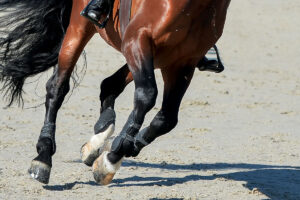
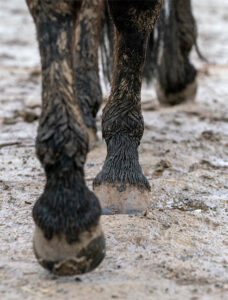
No matter the breed or discipline, good conformation of the hind legs will contribute to more successful performance and a better ride. We can think of equine rear end function in terms of cars and trucks with rear wheel drive. The engine comprised of muscles fueled by heart and lungs, provides the power, and the back legs are akin to piston-driven rear wheels.
Regardless of discipline, we want a horse to have excellent rear leg conformation so that it can tolerate the demands placed on it and still remain sound.
This fourth installment of the anatomy and physiology series examines hind limb conformation, the key places where rear leg lameness problems are apt to develop – the stifle and the hock, and four most common deviations of rear leg conformation that cause can cause problems.