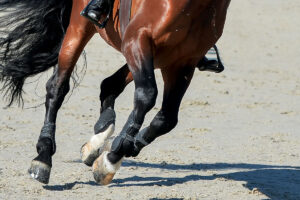
When a horse exercises, it involves an “integrated” response of many different body systems. This is exemplified by the respiratory and cardiovascular systems, which must get up to “speed,” often from a standing start, to ensure that sufficient oxygen is delivered to the working muscles to allow them to continue to function optimally.
For each stride the horse takes, it takes one breath. If a horse is having trouble moving air in and out, it will impact his stride when a horse is at a canter or gallop. Anything that interferes with breathing could affect how the horse performs.
This free report provides the horse owner and caretaker with an overview of the breathing process while a horse is exercising and the important link between breathing and stride.