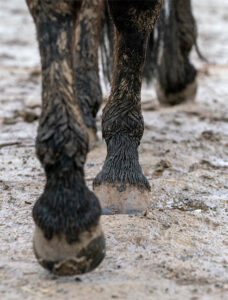
The second year of a horse’s life brings significant changes not only in his development, but also in his use. Lanky yearlings, though perhaps still hip-or- wither- high, broaden and become more proportional. Fillies and stud colts show increasing sexual maturity. And, depending upon the intended discipline, an owner’s thoughts turn toward training. The changes during the 18-24-month period bring rewards, but they also carry health risks.
Ideally, a horse owner will monitor a foal’s development from birth — closely observing growth, conformation, nutrition, housing, socialization, and preventive care, but this free report provides tips on the basics of caring for a young horse – 18 to 24 months.