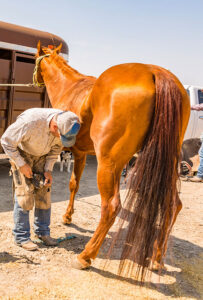
Nearly every horse owner has trailered a horse from point A to point B. Many horse owners do it on a regular basis, going to competitions, rodeos, or rides every other weekend or so. We make sure the vents in the trailer are adjusted properly to account for the outside weather. We protect our horses’ legs, hooves, heads (and sometimes other parts of their bodies) so they don’t get banged up. We drive carefully around corners, and avoid potholes and quick stops and starts. We give them a bit of hay to keep them occupied and happy, throw some straw under them to help with clean-up, and check on them when traveling several hours.

KIM AND KARI BAKER PHOTO
If people are traveling every weekend and the horses are exercising during the week, then there probably is a cumulative effect
Create a free account with TheHorse.com to view this content.
TheHorse.com is home to thousands of free articles about horse health care. In order to access some of our exclusive free content, you must be signed into TheHorse.com.
Start your free account today!
Already have an account?
and continue reading.