Tying-Up in Horses
Tying-up is the most common muscle problem in horses. This syndrome is also called azoturia, set fast, paralytic myoglobinuria, and chronic exertional rhabdomyolysis (ER). HYPP (hyperkalemic periodic paralysis) in Quarter Horses is a different problem. Tying-up is not a single disease, but a collection of clinical signs with various causes. Several of these causes for tying-up have already been identified, and more are on the research horizon.
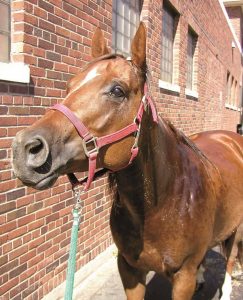
Classic tying-up symptoms include sweating, stiffness, and reluctance to move forward. Some horses with chronic tying-up might resent exercise. These symptoms are all manifestations of pain due to muscle damage that is most severe in the rear legs.
Some horses suddenly exhibit signs of tying-up with no history of a problem. These horses usually recover with rest and treatment and go on to perform successfully. Causes can include exercise in excess of training; exhaustive exercise, especially on hot, humid days; and respiratory infections (tying-up seems more common after viral infection has swept through a barn). Some horses have chronic tying-up from a young age, even when exercised lightly.
Diet appears to influence some forms of ER. In some athletic horses, a normal diet of oats and hay doesn’t provide sufficient salt and minerals to fulfill demands on the muscle. Supplementing with a balanced vitamin/mineral mixture and access to salt might alleviate symptoms. Unfortunately, the majority of horses with ER don’t respond to mineral supplementation alone, and a more thorough investigation into their cause of ER is necessary
Create a free account with TheHorse.com to view this content.
TheHorse.com is home to thousands of free articles about horse health care. In order to access some of our exclusive free content, you must be signed into TheHorse.com.
Start your free account today!
Already have an account?
and continue reading.

Related Articles


Stay on top of the most recent Horse Health news with