How does your horse’s body adapt to exercise, and how can you tailor your conditioning program to maximize his fitness and soundness? How do you know if he is (or isn’t) ready for more work? See what Drs. Meg Sleeper and Todd Holbrook had to say.
About the Experts:
Todd Holbrook
 Todd Holbrook, DVM, Dipl. ACVIM, Associate Professor of Equine Medicine at Oklahoma State University and the Equine Section Chief. His special interests in equine medicine include infectious disease, gastrointestinal disease, and sports medicine. He has worked at numerous endurance competitions, nationally, and internationally, over the past 15 years. He raises Quarter Horses and competes in reining with his family.
Meg Sleeper
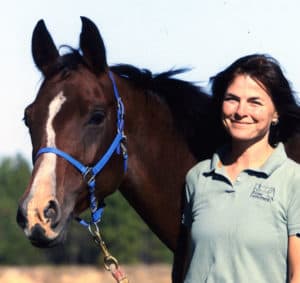 Meg Sleeper, VMD, associate professor of Cardiology at the University of Pennsylvania’s School of Veterinary Medicine and the school’s Cardiology Section Chief since 2001. Her primary research interests include inherited heart diseases, in particular inherited cardiomyopathies and therapeutic gene transfer. She is also an avid world-class endurance competitor with more than 14,000 miles logged and placings in endurance competitions in six countries, in addition to a best condition award.