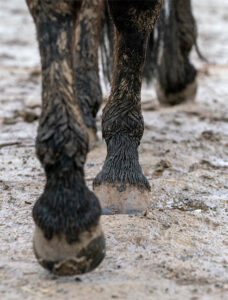
 Even factors unrelated to the musculoskeletal system such as metabolic, circulatory, and nervous system abnormalities can cause a horse to become lame. Because lameness due to musculoskeletal abnormalities is the leading cause of poor performance in athletic horses, being able to diagnose and treat a lame horse is a common and important technique in veterinary medicine.