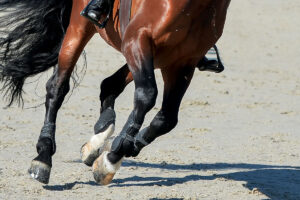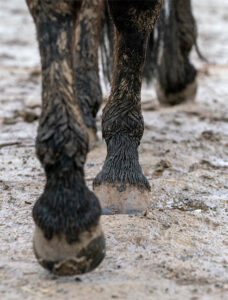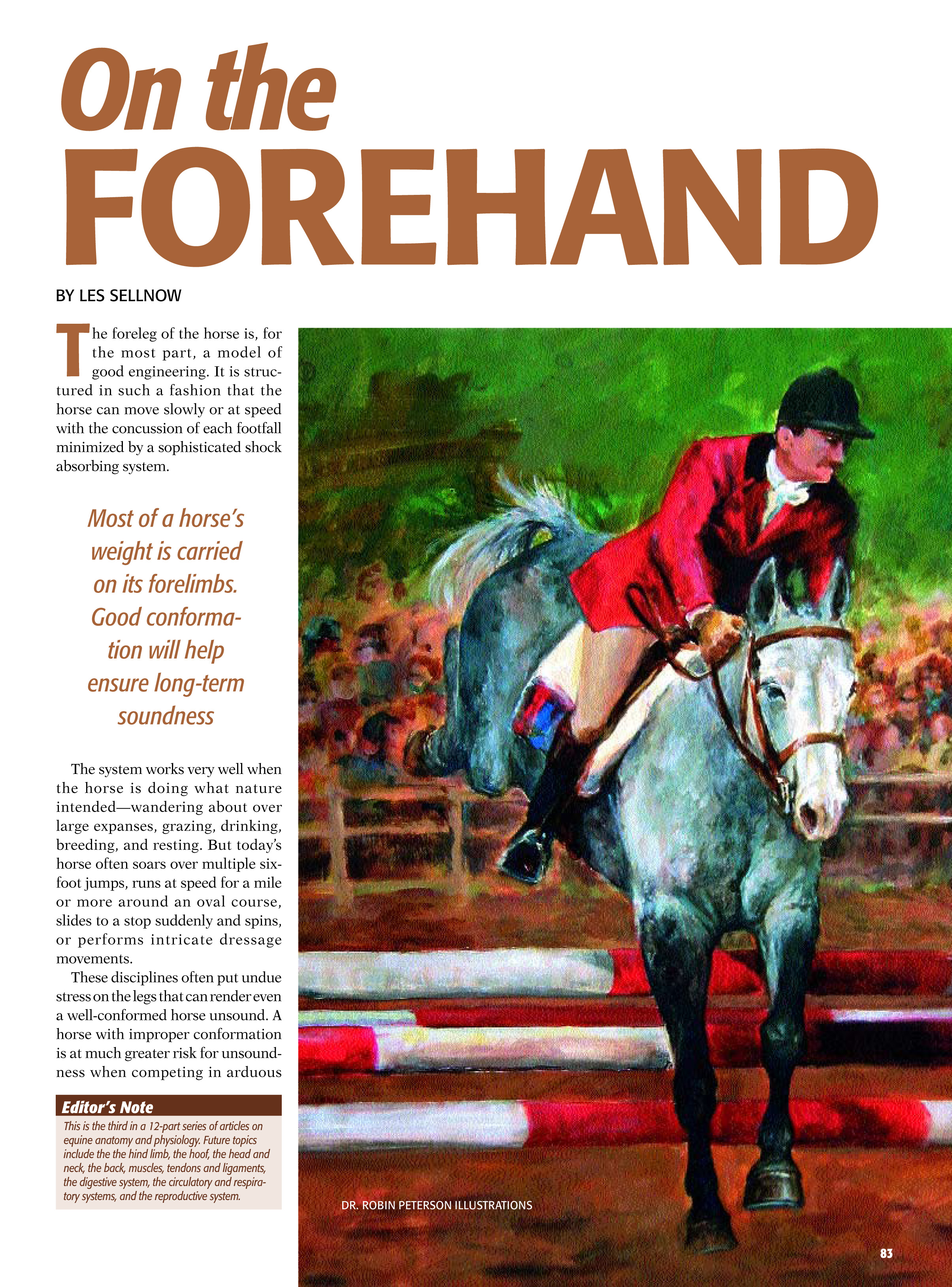
The foreleg of the horse is, for the most part, a model of good engineering. Most of a horse’s weight is carried on its forelimbs. A horse puts more stress on its front legs than its rear limbs, because it carries 60-65 percent of its weight up front.
While good conformation will help ensure long-term soundness, no horse has perfect conformation. Therefore, it is necessary to rely on experts to determine which conformation is best suited to a particular discipline or use.
This third installment of the anatomy and physiology series takes an in-depth look at just how the equine forelimb is constructed, what constitutes good conformation, and what can go awry when poor conformation is involved. Learn how forelimb conformation abnormalities can affect a horse’s soundness.