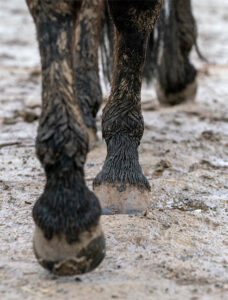
Learn how your horse’s body works in this free special report about equine anatomy and physiology. We look in-depth at the horse’s skin, types of joints, forelegs, hind legs, feet, head and neck, back, muscles, tendons and ligaments, digestive system, circulatory and respiratory systems, male and female reproductive tracts, and details of the nomenclature used to discuss anatomy and physiology
Download the entire 12-part series on horse anatomy and physiology. The series begins with an overview of horse anatomy and physiology along with basic terminology essential when discussing various conditions with a veterinarian, and how the horse’s skin protects underlying tissues and regulates body temperature.