Common Equine Skin Conditions
Equine skin conditions are often difficult to diagnose and frustrating to treat, with causes ranging from fungus to allergens to who-knows-what. Check out our pictures of common equine skin conditions—patchy to scabby and everything between—in this slideshow. (At left: rain rot). | Photo: Paula da Silva/www.arnd.nl
Sarcoids
A sarcoid is a nonmalignant but locally aggressive tumor most often seen on the head, belly, groin, and legs. The most common are verrucous, with a warty look, or fibroblastic, which resembles proud flesh. Bovine papilloma virus (BPV) is probably a causative factor in sarcoids, and a 2010 study of 222 horses at the University Equine Clinic of Bern identified a possible genetic basis for sarcoid development in horses as well. | Photo: Anne M. Eberhardt/The Horse
Scratches
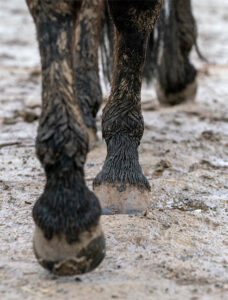
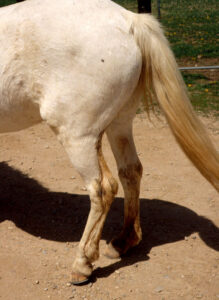
Breaks in the skin lead to bacterial and/or fungal causing scaly patches, hair loss, and inflammation on the legs called scratches (aka grease heel or mud fever). Causes include contact allergies and irritants, infestation with Chorioptes mites (leg mange), and malformations with the lymphatic vessels, etc. Secondary infections are often worsened by exposure to moisture in mud or pastures. Draft breeds and other horses with feathered legs might be most susceptible. | Photo: Pam MacKenzie
Aural Plaques
As the name suggests, aural plaques form inside the horse’s ear. The cause of these crusty, whitish lesions is unknown; however, the spread of a papilloma viral infection by biting insects is suspected. | Photo: The Horse Staff
Rain Rot
Also known as rain scold or dermatophilosis, rain rot is skin disease caused by the opportunistic bacterium Dermatophilus congolesis, which thrives in moist conditions and enters through damaged skin (think bites or chaffing). Rain rot is usually evident over the horse’s neck, back, and croup, but can also spread to the legs. The skin crusts and raised tufts of serum-matted hair, called paintbrush lesions, form. The tufts usually shed, leaving hairless patches. Rain rot is contagious. | Photo: Mathea Kelley
Hives
Hives are round, raised wheals over the body that cause the hair to stand up. They can range from the size of a nickel to several inches in diameter and can cover part or most of the body. A breakout of hives is usually related to air-borne allergens (e.g., tree, bush, weed, or grass pollen; mold; dust; etc.); ingested allergens (e.g., feed ingredients); or vaccination or medication reactions. A breakout usually isn’t painful but might itch. | Photo: Dusty Perin
Warts
Warts are caused by the equine papilloma virus and are often associated with young horses. The lesions usually form on the muzzle and lips and last approximately 60 to 100 days before the horse builds a natural immunity and the warts spontaneously disappear. Warts are contagious and spread via direct contact with horses suffering active breakouts. | Photo: Pam MacKenzie
Ringworm
Ringworm is caused by a highly contagious fungal infection, not a worm, and is named for the shape of the skin lesions, which take on a ring-like appearance. Each ringworm forms a circle with a raised edge that encircles a hairless and often scabby patch. | Photo: Courtesy Dr. Marianne Sloet
Insect Hypersensitivy
Tiny insects, such as mosquitoes, ants, and a variety of flies, can cause big skin problems for your horse. Insect hypersensitivity is an allergic reaction, usually to a biting insect’s saliva, and is one of the most common equine dermatological issues. Bites can result in welts and bumps at the site of penetration, but can also lead to an outbreak of hives (see next slide). | Photo: Paula da Silva/www.arnd.nl
Sweet Itch
Sweet itch, aka Queensland itch or summer eczema, is a reaction to salivary antigens from the bites of Culicoides gnats (also called no-see-’ems). Small, itchy papules form on the skin. The horse’s mane and tail head are especially susceptible, and hair loss is often caused by rubbing the affected sites is common. Scabbing and ulceration can result from this self-mutilation. | Photo: Nancy S. Loving, DVM
Melanoma
Approximately 80% of gray horses will develop melanomas by the time they’re 15 years old. These skin growths are malignant tumors usually located near the anus, vulva, sheath, penis, ears, salivary glands, and underside of the tail. | Photo: The Horse Staff