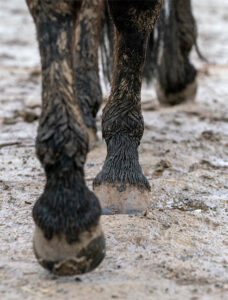
Ammonia is a small molecule composed of nitrogen and hydrogen with a characteristic pungent and unpleasant odor. Ammonia comes from urea—a nitrogen-containing molecule—that is present in urine and feces. Horses excrete urea to eliminate excess nitrogen from their bodies. While urea itself is odorless and nontoxic, it is rapidly converted to ammonia once excreted. Ammonia, unlike urea, is extremely irritating to the mucous membranes that line the mouth, eyes, and respiratory tract.
Various studies have found that ammonia levels are highest near barn and stall floors. Since horses frequently eat off the floor, have their heads down, and/or lie down when stabled for long periods of time, they can therefore be exposed to high levels of ammonia. This is particularly true of foals.