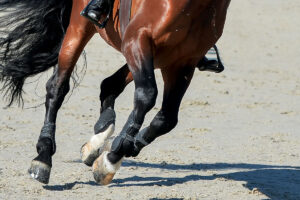
The horse has always been a coveted creature for his magnificent capacity to perform acrobat-like feats.
Despite his apparently effortless athleticism, all of his individual body parts are hard at work. The horse’s body is both powerful and capable of bending, turning around tight corners, and stopping on a dime, all thanks to his intricate combination of muscles, tendons, and ligaments.
Horses’ beauty in motion is achieved via the culmination of a complex and highly integrated interaction between muscles, tendons, ligaments, nerves, and a variety of other connective tissues. Successful coordination of all musculoskeletal system components is imperative for smooth, fluid, pain-free movement. Injury to or malfunction of any part of the locomotor apparatus will negatively impact performance.